

About of
The Inkarri Cusco Institute
The book
The story in video
Contact us
The Inkarri Cusco Institute is a non-governmental organization chaired by Thierry Jamin, historian and explorer.
Since 1998, Thierry Jamin has been travelling throughout southeastern Peru in all directions, following the traces of the permanent presence of the Incas in the Amazon rainforest and the lost city of Paititi.
After numerous research campaigns conducted in collaboration with the Peruvian authorities, Thierry Jamin and his colleagues created the first non-governmental organization dedicated to scientific research in September 2009. Thanks to them, some thirty exceptional archaeological discoveries were officially recognized between 2009 and 2011 in the northern part of the Cusco department. These included several necropolises, fortresses, and numerous magnificent Inca citadels teeming with hundreds of buildings, dozens of streets and squares, and so on. Thierry Jamin is convinced that the main focus of his research is now very close.
The Inkarri Institute website
The missions of the Inkarri Institute
As its name suggests, the mission of the Instituto Peruano de Estudios Históricos & Investigaciones Arqueológicas Inkarri is to promote, encourage, and conduct scientific research programs of a historical, archaeological, and/or anthropological nature throughout Peru. Its main research focus is the study of the enduring presence of Inca and pre-Inca civilizations in the Peruvian Amazon rainforest and the search for the location of their principal center of occupation and expansion. The hypothesis of the existence of a major Amazonian archaeological center, such as the legendary lost city of Paititi, has been one of the main avenues of research for Thierry Jamin and his team since 1998. The results of the Inkarri group's latest exploration campaigns support this hypothesis.
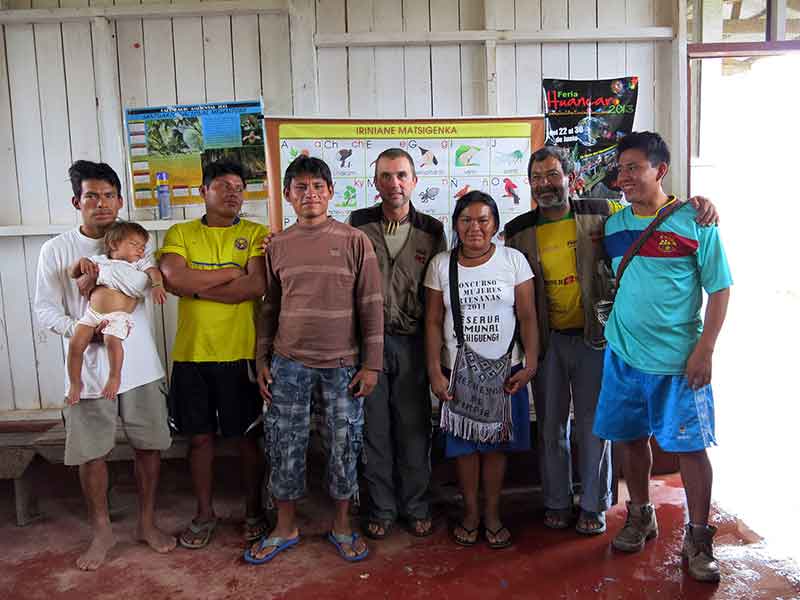
The Inkarri Institute operates within the framework of Peruvian law.
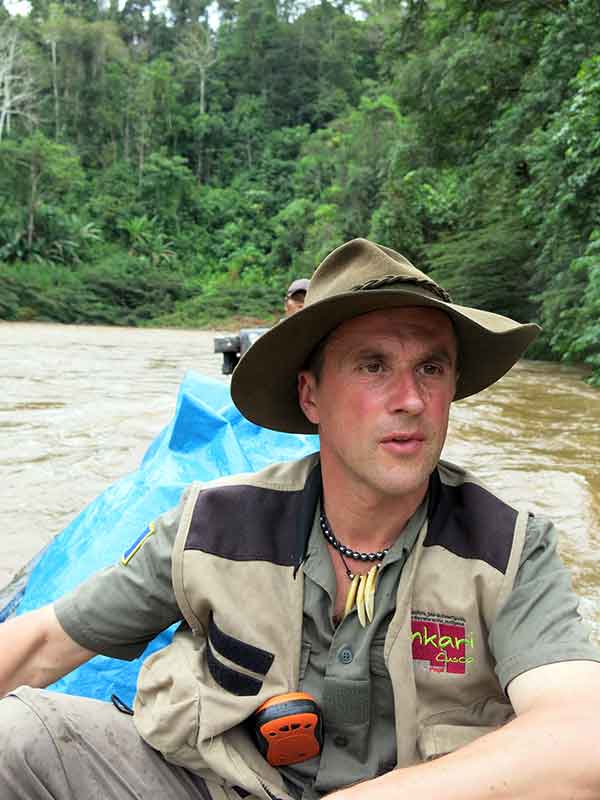
Furthermore, the Inkarri Institute works exclusively within the legal frameworks provided by Peruvian law, in coordination with official institutions and administrations: Ministry of Culture, Decentralized Directorates of Culture (DDC-Cusco, DDC-Madre de Dios, etc.), Ministry of Environment, National Service of Natural Protected Areas (SERNANP), regional governments, provinces, districts, municipalities, peasant communities, etc.
Après chaque campagne d’investigation, dûment approuvée par les autorités officielles péruviennes, les résultats des recherches archéologiques du groupe Inkarri sont publiés dans un rapport final, transmis au ministère de la Culture. De même, ces investigations font l’objet de publications régulières dans la presse professionnelle et/ou grand public, au niveau national et international.